 By
By 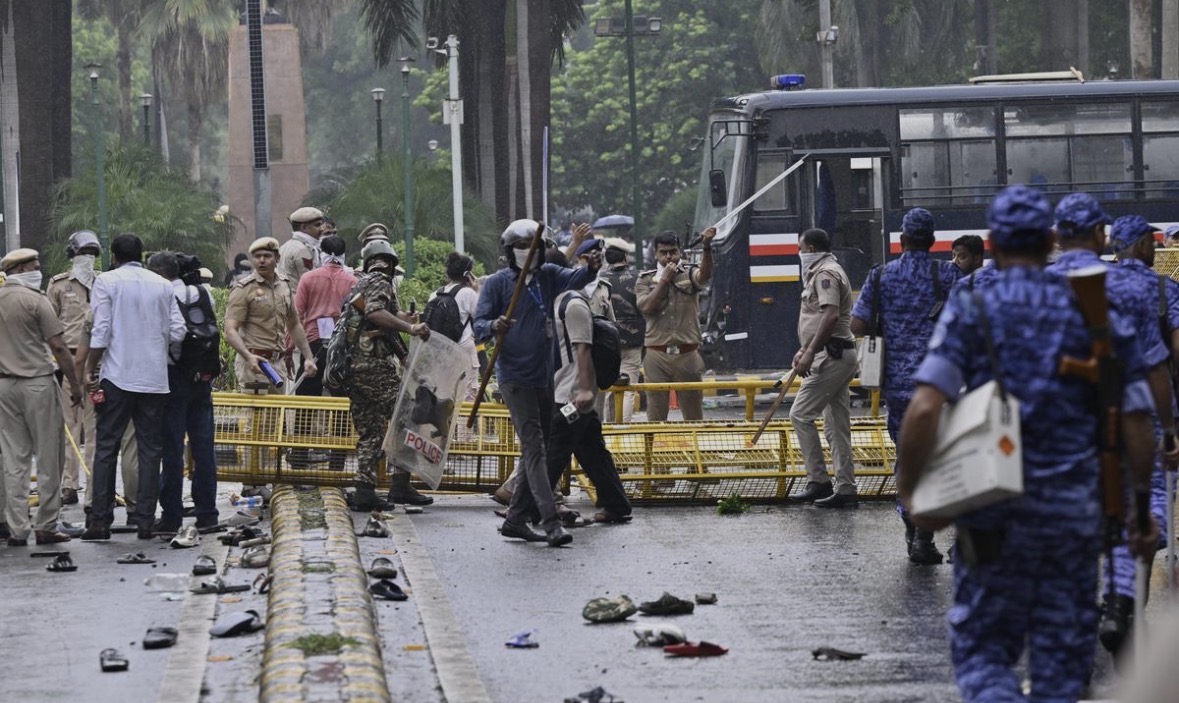
New Delhi | July 30, 2026
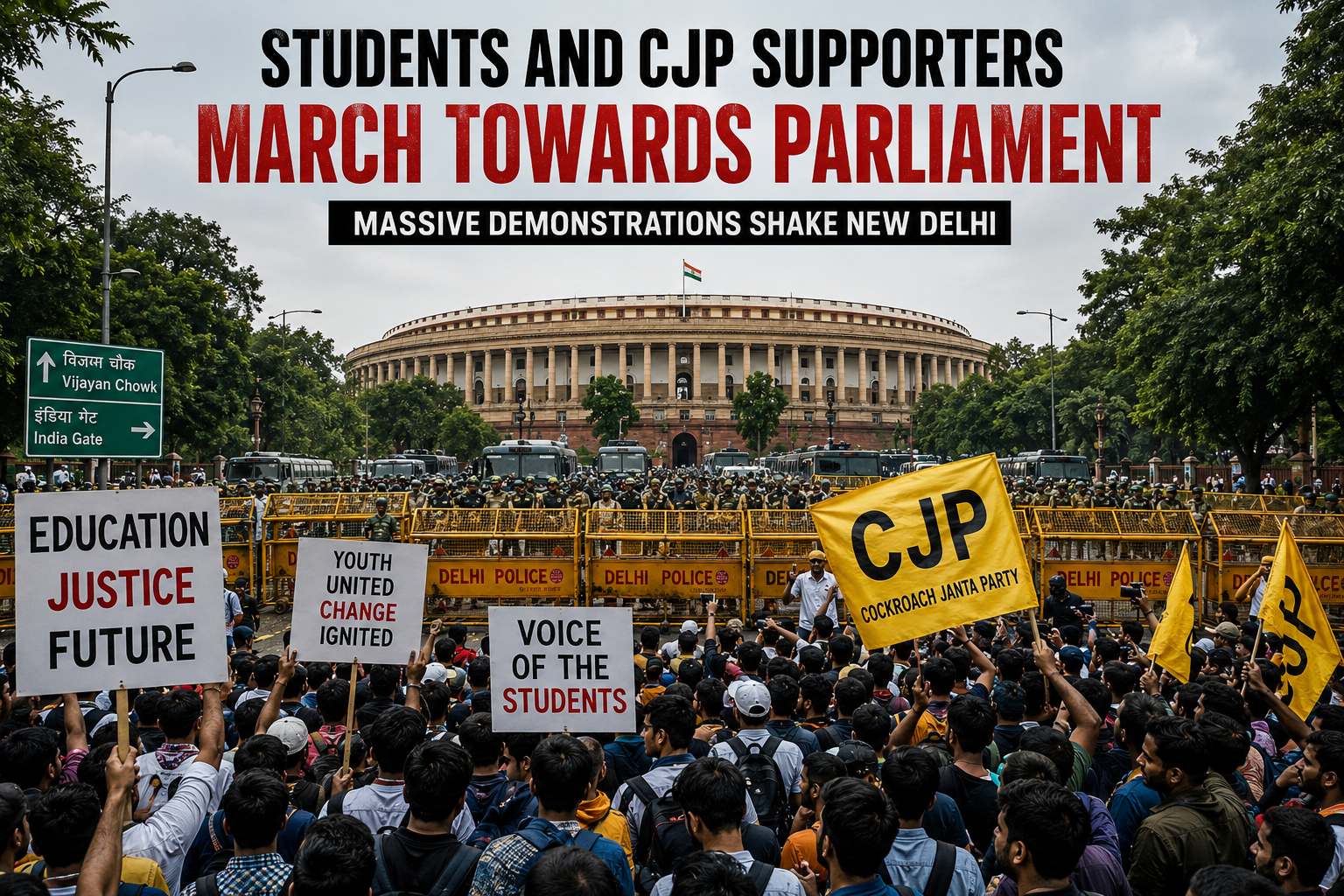
India’s national capital has once again become the center of intense political and public attention as tens of thousands of students and supporters of the Cockroach Janta Party (CJP) gathered in New Delhi in an attempt to march towards Parliament. The large-scale mobilisation prompted authorities to implement extensive security measures, including multi-layered barricades, deployment of additional police personnel, and traffic restrictions across key areas of the city.
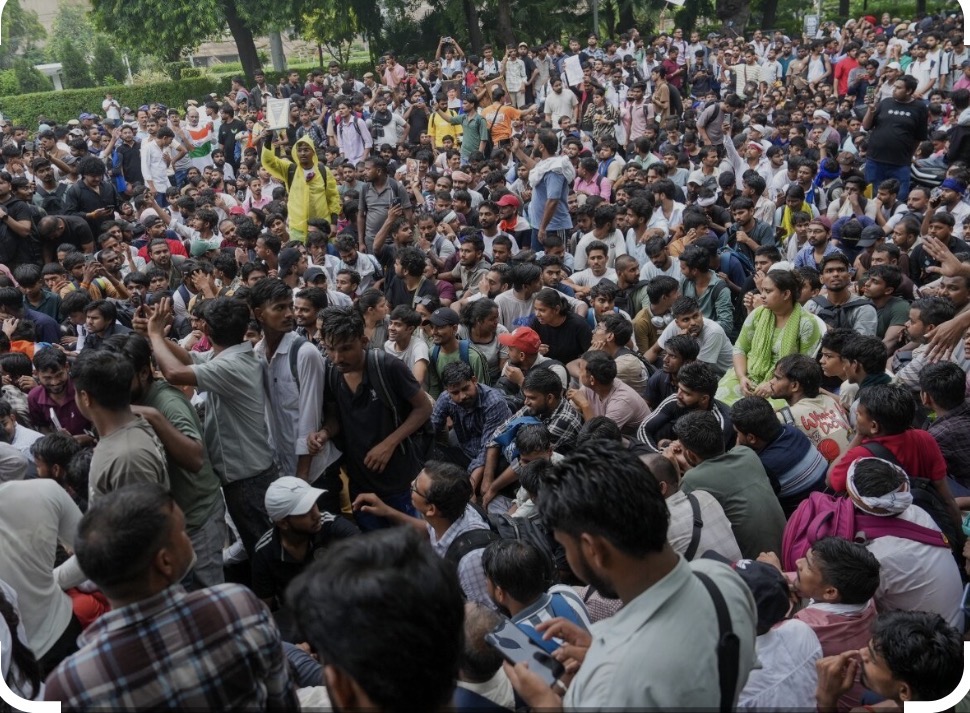
The demonstration reflects growing frustration among sections of the country’s youth over issues such as education reforms, examination transparency, unemployment, and government accountability. What initially emerged as a satirical online movement has rapidly evolved into a nationwide youth-led campaign capable of drawing thousands of participants to the streets.
Security forces maintained a heavy presence around Parliament and other sensitive government installations to prevent protesters from entering restricted zones. Authorities erected multiple barricades and closely monitored the situation, while commuters experienced significant traffic disruptions in central Delhi due to diversions and security checks.
Organisers maintained that the march was intended to be a peaceful demonstration highlighting the concerns of students and young citizens. Officials, however, emphasized that maintaining public order and protecting high-security areas remained their top priority, leading to restrictions on the proposed route of the march.
Political observers note that the emergence of the Cockroach Janta Party has become an unusual yet significant phenomenon in India’s contemporary political landscape. Although it began as an online satirical campaign, the movement has attracted considerable support among young people through social media and public demonstrations, bringing issues affecting students into the national spotlight.
As Parliament continues its proceedings, the unfolding demonstrations underscore the importance of constructive dialogue between citizens and policymakers. Democratic societies rely on peaceful expression of public concerns while ensuring that law and order are maintained, making balanced engagement essential during periods of heightened public mobilisation.